
Home Blog

George Street Fire, Part 1: Blaze in early 1966 destroys homes and businesses in Montserrat’s capital

0
Photo courtesy Bob Hare collection
Fifteen businesses were destroyed by the George Street Fire in 1966.

First of a two-part series.

The new year is often ushered in with fireworks. For Montserrat the start of 1966 was marked by a historic fire. This was no celebratory blaze. By the time the inferno was reduced to smoldering rubble, 15 businesses and homes had been destroyed and 30 people were homeless. Thankfully, there were no deaths. But the disaster ravaged a crucial commercial sector in Plymouth and exposed the vulnerabilities of a quaint British colony.

Six decades later, many recall the fire vividly. There were hasty evacuations of the elderly and vulnerable, mishaps by the firefighting crew, and a daring night landing at Blackburne Airport by Leeward Islands Air Transport (LIAT) owner Frank Delisle, who arrived with equipment and reinforcements.

In the aftermath, several businesses – most of whom had no insurance – were shuttered for good. For some who had insurance, the damage far exceeded the coverage. However, the incident elicited profound community support. A Fire Relief Fund was created and there was even a benefit concert featuring a young Alphonsus “Arrow” Cassell.

Despite an investigation there was never an official finding of what caused the fire. But many Montserratians had their suspicions, and all signs pointed to one suspect.

Through newspaper archives, interviews with survivors, plus a 2006 documentary by Montserrat historian Randy Greenaway, Montserrat Spotlight has delved into the fire and its far-reaching impact.

Photo courtesy Randy Greenaway
George Street before the fire, circa 1965. The business at right is Hamsey Allen’s store, which had a soft drinks factory in the back.

WHERE THERE’S SMOKE . . .

On September 17, 1965 – less than four months before the George Street Fire – Montserrat endured the tragedy of the Pan Am plane crash at Chances Peak that claimed 30 lives. Now, the island was faced with another unprecedented disaster.

On January 6, 1966, Montserrat had just completed a successful Festival season in which Justin “Hero” Cassell won the calypso king title and Rose Willock was crowned Festival queen. The island was now in full preparation mode for the Royal visit of Queen Elizabeth on February 19. It would be the monarch’s first trip to Montserrat.

But on that fateful Thursday evening a distinctive sound permeated the air.

“I was at home in Cork Hill when I heard the bugle,” said Alfred Christopher, a member of the Montserrat Defense Force from 1957 to 1978. “In those days a member of the Defense Force would drive around and blow a horn, alerting soldiers to report to the headquarters in town.”

Montserrat did not have a full-fledged Fire Department, only a Fire Brigade with a handful of volunteers and a small fire truck at the Police Station on Harney Street. Fires are rare in Montserrat and can usually be handled by the Brigade. But this was no ordinary blaze. As with all emergencies, the Defense Force was brought in for support. Ironically, the Defense Force headquarters was located on George Street, directly in the path of the fire.

“When I got to George Street the fire didn’t look that bad,” said Christopher, now 87. “It was more smoke than anything. But then some strong winds started blowing from the south and the fire started to spread.”

Yellow indicates area of George Street affected by the fire, red arrows show direction of the blaze, and X shows where it began.
Photo courtesy Randy Greenaway
The “Brother” Dan Fenton building, where the fire started in 1966, is pictured during the 1990s. Next door is where Marse Reggie Osborne’s business was located, with Defense Force headquarters upstairs.

DESTRUCTIVE PATH

The fire began at the two-story building owned by “Brother” Dan Fenton, located just west of Old Chapel Street on George Street – on the left side if one is heading west. The blaze spread next door (west) to another two-story establishment, this one featuring the Defense Force Headquarters upstairs and Reggie Osborne’s Drinks Factory below.

Many buildings on George Street – and in Plymouth – were two stories and made of stone on the bottom and wood on top with galvanize roofs. Some of the proprietors and their families lived on the second floor. At first it appeared as if the fire would be confined to one side of the street. Then the improbable happened.

“The fire came across the street along the electrical wire,” said Roosevelt “Cubby” Jemmotte, who lived on George Street. “It was like a rat running across a wire.”

Jemmotte, then 21, was working as an agent with British-American Life Insurance, located in the T.W. Bramble building, a short walk east from Jemmotte’s family home on the northern side of George Street. Some newspaper reports stated that the fire began at around 10 p.m. but Jemmotte says it was much earlier.

“I was in the office finishing my reports for the day when I looked out and saw the fire across the street. I ran down to the police station on Harney Street to tell them there was a fire.”

When Jemmotte returned to the scene he witnessed the fire traveling across the electrical wire toward the northern side of George Street, not far from his family home. Jemmotte quickly evacuated his mother and other relatives, taking only clothes and other necessities.

Alfred Christopher, Roosevelt “Cubby” Jemmotte and “Marse” Reggie Osborne.

MANY AFFECTED

According to a report in the Montserrat Mirror newspaper, the businesses and homes destroyed or affected were:

Southern side of George Street: Dan Fenton Building, home of the West Indies Packing Company, which sold frozen goods; Reggie Osborne’s Drinks Factory; Defense Force Headquarters, located atop Osborne’s factory; Hulda Rogers building (Rogers lived upstairs and Mrs. Mary Charles had a shop downstairs); home of Mrs. Harper, a retiree and widow; Advance Dress Shop, located on first floor of Mrs. Harper’s building and owned by Mrs. Daisy Nanton; home and rum shop of “Son-Son” Allen.

Northern side of George Street: Lindy Eid’s New York Store; T.W. Bramble Building featuring British-American Life Insurance Company and office of Dr. Desmond Wooding; shop of Charles Jones; home and pre-school of Teacher “Tudie” Donoghue and her two sisters; Hamsey Allen’s Shop and Drinks Factory; Jemmotte family residence; residence of Franklyn Farier, Montserrat’s Health Inspector.

ADDING FUEL TO FIRE

Fires are destructive enough without assistance. But on that night the blaze received several boosts that helped it to expand: strong winds (oxygen), fuel (wood) and one more potent element.

“Lindy Eid used to have alcohol stored in his shop so it helped to ignite the fire,” Jemmotte revealed in the Greenaway documentary.

Over on the southern side of the street, Defense Force members managed to remove some items from the clubhouse, including rifles. But bullets were left behind. Although they were blanks, when the fire made contact with them, a barrage of shots rang out in the area. George Street sounded like a war zone.

“Bullets react the same way whether it’s blanks or they have the projectile,” explained Major Joseph Lynch, a former commanding officer of the Defense Force.

Teresa Pond-Moses lived on George Street, about 200 yards north of the fire. She recalls walking down to the area with her mother at about 10 p.m. and witnessing the spectacle.

“We saw flames leaping from one side of George Street to the other,” she said. “It was like a monster dragon belching long, vicious tongues of fire trying to eat the houses.”

Photo courtesy Bob Hare collection
Lindy Eid’s New York Store ablaze during the George Street Fire.

FIGHTING THE BLAZE

It quickly became apparent that Montserrat’s Fire Brigade was ill-prepared to handle the blaze. In Greenaway’s documentary, Fire Brigade member James “Raypa” Meade said it took some time to open the fire hydrant in Plymouth because Brigade leader Corporal Thomas, who lived in Parsons, possessed the only key. By the time Thomas arrived and the hydrant was unsealed, extensive fire damage had occurred.

The Brigade members tried their best to stifle the blaze and even doused some buildings in the path of the fire as a pre-emptive strike. Then, another problem. The hydrant water supply ran out. Thankfully, the Federal Palm, a regional shipping vessel, was just offshore.

Richard Samuel, another Brigade member, stated in the documentary: “Federal Palm sent in a hose but their connection couldn’t fit our pipe. The next alternative was to use the sea water. So we brought down the small fire truck [to the wharf] and I operated the pump.”

Realizing the fire was getting out of control, the authorities contacted Antigua for help. Frank Delisle, a native of St. Kitts who moved to Montserrat in the 1940s and eventually launched LIAT – the region’s first airline – was now living in Antigua. Delisle assembled some Antigua firefighters, along with equipment, and prepared for the short flight to Montserrat on his six-seater Beechcraft Twin Bonanza. There was one problem. Blackburne Airport had no lights. It was also unpaved. Delisle told his contacts in Montserrat to simply have some cars parked adjacent to the airstrip with their headlights on. They obliged, and the experienced pilot made a safe landing in the middle of the night.

LIAT founder and pilot Frank Delisle.

The fire-fighting coalition now included the Fire Brigade, Police, Defense Force, Antigua crew, the Federal Palm crew, plus normal citizens, including Father Joseph Stryckers, priest at the Roman Catholic Church on George Street. At around 4:15 a.m. the fire was finally vanquished. It was a combination of water and good fortune. As the fire headed west it eventually met alleys. Those gaps stemmed the progress, making it easier for the fire to be put out. Folks expressed relief that the fire didn’t reach the O.R. Kelsick Building – also known as the Hope Ross Building – because it would have spread to Parliament Street, which would have been even more catastrophic.

PICKING UP THE PIECES

When dawn arrived hundreds flocked to town to check on friends and loved ones, assess the damage or simply satisfy curiosity. As folks shared stories about the harrowing night, tales of heroism began to emerge, such as the swift evacuation of the elderly, many of whom were asleep when the fire began.

It is said that the night brings mischief, and nefarious deeds also began to surface, such as sporadic looting. But the mobilization of a community was what eventually quelled the blaze and sparked a rebuilding.

“I remember seeing Father Stryckers walking slowly up George Street at about 5 o’clock in the morning looking exhausted,” said Teresa Pond-Moses, who was 12 at the time. “He had been battling the fire for hours. We later learned that before he became a priest he was a fire-fighter.”

The ordeal was over but so much remained unknown. Who or what started the fire? How much damage occurred? Where would many of the displaced residents end up? How would the incident affect preparations for the Royal visit?

And by the way, who stole Marse Reggie’s money from his safe?

Yes, there were burning questions.

Read Part 2: Recovery begins amid tales of arson and theft, plus another tragedy three years later.

Edna Baptiste, Montserrat’s first Festival Queen, leaves legacy of grace, elegance and humility

1
Photos courtesy family of Edna Baptiste
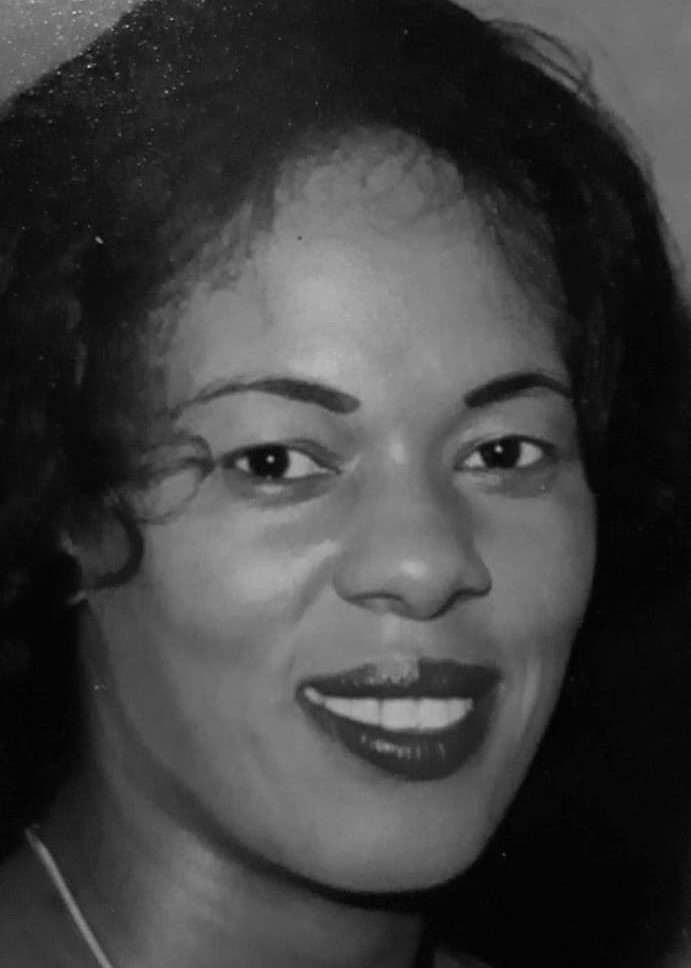
Edna Baptiste spent the last 27 years of her life residing in London.

Edna Baptiste made history in 1962 as Montserrat’s first Festival queen. But her life would not be defined by simply being a beauty pageant contestant. She was a devoted wife and mother and a caring sister. She was also a teacher and company manager who left an impression with her congeniality, grace and generosity.

A consensus among those who knew her best revealed a peaceful soul who traversed all social circles with ease. She was approachable and affable and forged lasting friendships. As one former colleague stated: “She was always smiling – even if she was upset.”

Edna Baptiste passed away in a London hospital on Friday, October 10, 2025 – 12 days after her 82nd birthday. She had battled several ailments in recent years but her health deteriorated rapidly in the weeks before her death.

“I am so broken up right now,” said Edna’s sister Adelina Tuitt, who served as a minister with the Government of Montserrat from 1996 to 2001. “We used to talk every day, sometimes on What’s App or video call. My sister was beautiful and she had a love for people.”

To friends and colleagues Edna was a trusted confidante and reassuring presence. To her former students she was “Teacher Edna” – the lady who exemplified class while teaching class. To her children she was the mom who enjoyed baking cornbread for her boys on Sunday, preparing Cabbage au Gratin and listening to Earth, Wind and Fire.

Edna’s appeal was innate, not invented. And her humility was a byproduct of her upbringing.

Edna Baptiste in 1978.

HAILING FROM THE EAST

Edna Elvira Tuitt was born on September 28, 1943 in Farms Village in the east of Montserrat. She was the fourth of 10 children born to Noel Tuitt – affectionately known as “Dada Tarm” – and his wife Sarah.

“Our father was an expert builder,” Adelina said. “He built a lot of the houses in Farms. I think Edna got her personality from him. He was very quiet and humble.”

Edna attended Bethel Primary School, about a half-mile east of Farms. In January of 1955 she became the first member of her family to attend the Montserrat Secondary School. It was a big deal in those days, especially for children from rural areas.

“We entered Secondary School on the same day and we remained friends throughout,” said Pamela Arthurton, who succeeded Edna as Festival queen in 1963. “We played netball for the school team and I’m godmother to her son. She has always been dear to me.”

Jim Bass, a former Permanent Secretary with the Government of Montserrat, attended MSS with Edna.

“She was in a lower Form but I remember her well,” Bass said. “She was a lovely person, very calm with a pleasant disposition. One thing that stands out for me is that she would give you her total attention when she was talking to you.”

FROM STUDENT TO TEACHER

In December of 1960, Edna sat the Senior Cambridge Exam and passed. She then launched her teaching career, first at St. George’s in Harris Village. She also taught at Cork Hill and Kinsale primary schools. In 1968 Edna attended Leeward Islands Teachers Training College in Antigua (now Antigua State College).

Jennifer Michael, who hails from Dyer’s Village, was taught by Edna at St. George’s in 1961.

“She was one of the most attractive and glamorous teachers of her time,” said Michael, then known as Jennifer Greenaway. “As a young girl I was quite taken with her overall appearance. She cared a lot for the children in her class and interacted well with all of us. I remember her copying work from her hardcover notebook to the blackboard with that noted left hand. I was excited listening to the radio when she participated in our first queen show.”

Adelina said that for many years after Edna’s teaching career ended and she had migrated, her former male students would always inquire about her.

“They would ask me, ‘How is Miss Edna doing!? How is she?’ They all fell in love with her.”

Edna Tuitt, left, and fellow contestant Veronica “Nan” Hickson are pictured during the first Festival queen show on December 26, 1962.

CROWNING MOMENT

In 1962 the Montserrat Jaycees launched the island’s first official Festival, with the Queen Show as the main event. The Jaycees meticulously recruited contestants, searching for upstanding young ladies while ensuring most areas of the island were represented. The final five were: Edna Tuitt, 19, of Farms; Margaret Corbett, 21, of St. Patrick’s; Veronica Hickson, 22, of Plymouth; Audrey O’Garro, 18, of Salem; and Lynn Piper, 17, of Town Hill. 

Speaking in 2022, Edna recalled being sponsored by Lindy and Olive Eid, the couple who operated the New York Store, a variety outlet with locations on George and Strand streets in Plymouth. Edna shared a story about Peter “Red Poll” Howson, the popular town businessman and resident character.

“People started calling me ‘Miss New York Store’. I think most people expected Lynn Piper to win because she was sponsored by Vue Pointe Hotel. The day of the show, Red Poll walked past the stage and said, ‘Ah bet ayu Miss New York Store a go win.’ ” 

Red Poll was prophetic. Edna was crowned Miss Montserrat, with Lynn Piper first runner-up. Edna’s top prize was a trip to Trinidad. Fellow contestant Audrey O’Garro, who now resides in the United States, said in 2024: “I had a feeling Edna was going to win. She was pretty, she was mild-mannered and she had a wonderful personality.”

O’Garro then added with a laugh: “She was fair-skinned but she wasn’t stuck up.”

Ionie Ponde, Edna’s former MSS schoolmate and friend, said Edna was always beautiful but dressed conservatively at school with a simple hairstyle. So on the night of the show, now sporting a fancy evening gown and coiffed hair, she made a huge impact. Add her personality to the mix and it was magic. “I knew she was going to win,” Ponde said.

Edna prevailed but the contestant who would become most famous was Corbett, who was later better known as Margaret “Annie Dyer” Howe, the longtime politician and community icon who passed away in 2019.

I had a feeling Edna was going to win. She was pretty, she was mild-mannered and she had a wonderful personality.

– Audrey O’Garro, fellow contestant, on Edna (above)

AFTER THE PAGEANT

On December 18, 1965, Edna married Roy Baptiste, an Antiguan police officer who was working in Montserrat. The couple lived in Parsons in a housing compound shared by the families of fellow police officers Winfield Griffith, Sydney Charles Sr. and Thomas Richards. Edna and Roy welcomed two sons – Delbert in 1966 and Courtney in 1972.

In late 1969 Edna was hired by Leeward Islands Air Transport (LIAT) as a ticket agent. The following year she moved to Antigua when her husband was transferred to the police department there. She worked for LIAT in Antigua, then moved back to Montserrat in 1978 to manage the office of Montserrat Aviation Services. She lived in Richmond Hill and then Weekes’ before being displaced by the volcanic crisis and returning to Antigua.

In 1983 Edna gave birth to a third son, Leandro, better known as Lee. Delbert worked as a teacher for several years, including at Cork Hill School, where his mom taught years earlier. He was later employed by Cable & Wireless and now sells insurance. He has resided in Antigua since 1985.

Courtney – also known as “Colour Man” – was popular in entertainment circles as a musician with the band Tidal Wave and briefly as a nightclub promoter. In 1992 he captured Montserrat’s Road March title with the song Cock Fowl Jam. Sadly, he passed away in 2021.

Lee migrated to England with Edna and was her main caretaker during her illness.

Roy Baptiste, who served more than three decades as a police officer – achieving the rank of Deputy Commissioner of Operations for the Antigua Police Force from 1982 to 1989 – passed away in 1997.

Edna Baptiste, left, with brother Egbert and sister Adelina in 1992.

A CLASS ACT

Since Edna’s passing, many have shared stories about how she impacted their lives. Adelina said her sister would sometimes issue free airline tickets to the needy. When Edna worked for LIAT in Antigua, she was a welcome sight for in-transit Montserratians, who knew she would do everything within her power to address their travel issues. One traveler recalled desperately needing a flight out of Antigua and Edna getting her the final available seat on the airline. Making matters even better, it was a first-class seat.

Myrle Roach, a Montserrat author, poet and pageant organizer who now resides in the UK, worked with Edna briefly at Montserrat Aviation Services. She recalled a significant moment.

“Edna’s son Lee and my son Damien were friends and in the same class together,” Myrle said. “When my son passed away at age 10 Lee sang at his funeral. Edna’s words of comfort – plus Lee’s rendition – helped me get through a very difficult time.”

Edna Baptiste holds her award during the 50th anniversary of Montserrat Festival banquet January 2, 2013.

Edna relocated to England in 1998 and spent her final years in Ruislip, West London. She famously returned to Montserrat in 2012 for the 50th anniversary of Montserrat Festival and was honored along with other Festival icons January 2, 2013 at the Montserrat Cultural Center. She was regal as usual.

“My mother was elegant in her poise and character and she exuded class,” Delbert said. “She was always concerned about how she looked whenever she was going out.”

Asked about Edna’s parenting style, Delbert said: “She was a disciplinarian and she always looked out for the best for her children.”

An online memorial page was set up shortly after Edna’s passing. Several people left messages of condolences and reflections. One of the posts came from Sharon Edwards-Nicholas.

“When I think of Mrs. Edna Baptiste, the first thing that comes to mind is her radiant smile. It was more than a facial expression, it was a beacon of kindness and joy that made you feel instantly welcome. She was dearly loved and will be fondly remembered.”

Montserrat’s first queen has taken her final bow.

The tiara has been replaced by a halo.

My mother was elegant in her poise and character and she exuded class.

– Delbert Baptiste, on mom Edna Baptiste (above)

Note: Edna Baptiste’s funeral was held Friday, November 21, 2025, at Sudbury Methodist Church, 809 Harrow Rd., Wembley, Middlesex. She was interred at Northwood Cemetery.

Montserrat Festival Queens

1962: Edna Tuitt1983: Daphne Christopher2006: Techar Cuffy
1963: Pamela Nanton1984: Ann Lewis2007: Naseeka Carty
1964: Norma Dyer1985: Evonne Bramble2008: Loralyn Fergus
1965: Rose Willock1986: Pauline Wall2009: No show
1966: Florence Allen1987: Jemma Neptune2010: Robekah Lindsey
1967: Daisy Kirnon1988-89: No shows2011: Claris Yearwood
1968: Leona Tuitt1990: Veronica Dorsette2012: Kadija Furlonge
1969, 1971, 1972: No shows1991: Athema Daley2013: Tazia Briscoe-Jarrett
1970: Coralie Perkins1992: No show2014: Sharissa Ryan
1973: Ruthlyn Gerald1993: Doris Piper2015: Tabeanna Tuitt
1974: Ethlyn Semper1994: Ezra Moulon2016: No show
1975: Valerie Maynard1995-98: No shows (volcano)2017: No show
1976: Catherine Ryan1999: Jodine Meade2018: Vanice Tuitt
1977: Patricia Bryan2000: Estelle Furlonge2019: Janet Turner
1978: Rose Silcott2001: Lyandra Hobson2020: No show (COVID)
1979: Glendena Taylor2002: Maudella Daley2021: Nia St. Claire
1980: Diane Daniels2003: Francelise White2022-23: No shows
1981: Jacqueline Allen2004: Jasmine Jno-Baptiste2024: Mauricia Barzey
1982: Mary Ann Gerald2005: Janelle Weekes2025: No show

Montserrat remembers veteran educator and community pillar ‘Teacher Elva’ Greenaway

0
Photo by Carlton Cabey
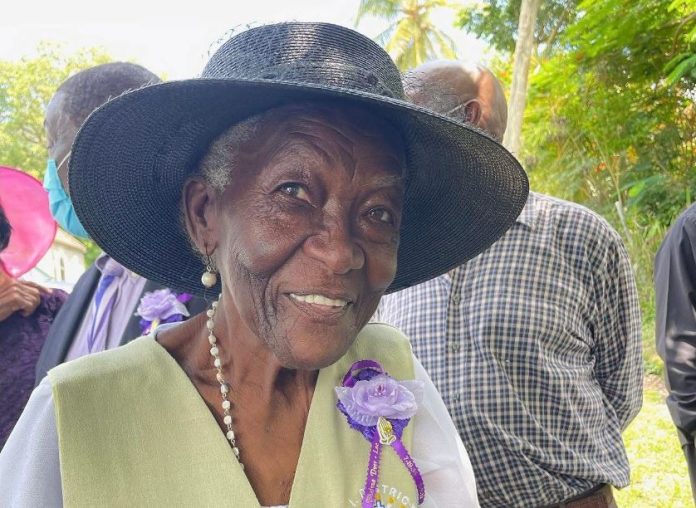
Manelva "Teacher Elva" Greenaway is pictured on September 9, 2022.

Manelva Greenaway was an only child who had no children of her own. Yet she impacted the lives of thousands of children. For most of her 90 years “Teacher Elva” educated, motivated and inspired. She was one of the last remaining “old school” teachers, who dedicated their lives to the profession and made personal sacrifices in order to always set a good example. She was also a staunch Methodist who stressed the importance of giving her students a Godly foundation.

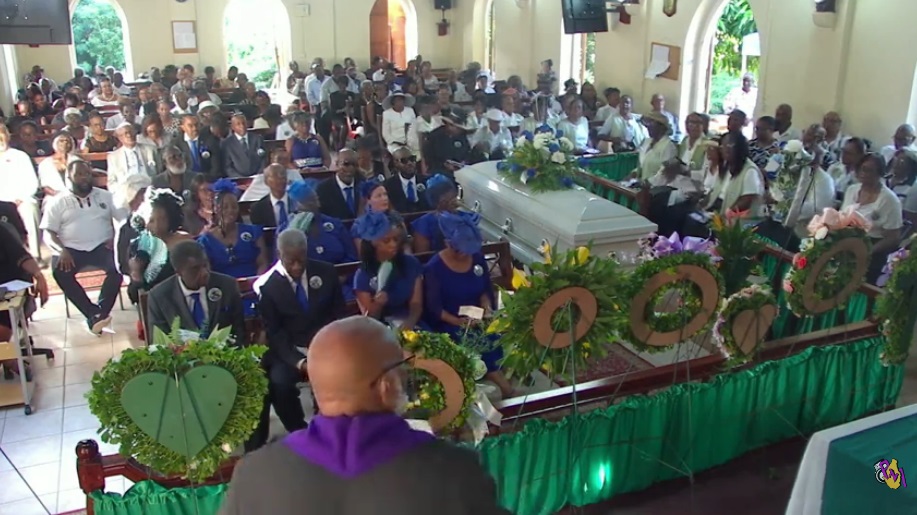
Teacher Elva passed away on October 3, 2025, a few weeks after suffering a debilitating fall. She was remembered on Wednesday, October 29 as a community stalwart, dedicated servant, jovial soul and versatile individual. The Bethesda Methodist Church in Cavalla Hill, Montserrat, featured a capacity crowd, striking floral arrangements and several mourners wearing royal blue, Teacher Elva’s favorite color. There were tributes from family members, former colleagues and students, plus a poignant eulogy.

“I knew her all my life,” said Edith Duberry, retired teacher and fellow Methodist who grew up not far from Teacher Elva’s home in Cork Hill. “She was very talented and had skills in singing, piano music, cake decorating, dress making and all sorts of handicraft.”

Teacher Elva taught at eight primary schools over a six-decade career: Salem, Cork Hill, St. Patrick’s, St. Peter’s, Kinsale, Lees, St. Christopher’s and St. Augustine. Her lessons didn’t end in the classroom. She was a Sunday School teacher who also taught music, played the piano and organ in church and directed the choir. As a teacher she was strict, but she utilized the power of her example more so than the example of her power.

A young Teacher Elva.

TEACHER OF A TEACHER

Manelva Elizabeth Esther Greenway was born Thursday, November 22, 1934 in Cork Hill. Her parents, Bridget and John Greenaway, were known as “Miss Biddie” and “Marse Poopah.” Miss Biddie ran a small nursery school in the family home near Grandstand, just off the side road that led to Delvins Village. She also gave piano lessons.

One of Miss Biddie’s students from the early 1950s explained: “Miss Biddie was a very proper lady and we had to dress well and speak well. We would do our lessons and then she would take us in the yard and have us do exercises. It was mostly girls in the class but I do remember one boy [Edgar Nkosi White]. At that time Teacher Elva was still in school. When she got home she would help Miss Biddie with the children. Teacher Elva was tall and slim and always well dressed. I remember her playing the piano. You can tell she inherited a lot of her qualities from her mother.”

Assisting in her mother’s nursery introduced Elva to teaching, and in 1954 she began her career at Salem Primary School. She attended Erdiston Teacher’s College in Barbados from 1956 to ’58, then Institute of Education at Durham in the UK on a scholarship (1963 and ’64). She earned Head Teacher status in 1966 and served in that capacity at Cork Hill, Salem, St. Peter’s and Kinsale primary schools.

Rosamund Meade, who taught for 48 years, credits Teacher Elva with salvaging her career.

“I started teaching at Wesley School in 1966 right after graduating from Montserrat Secondary School,” said Meade, better known as Teacher Winifred. “I was overwhelmed at first. They transferred me to Cork Hill School in early 1967 and Teacher Elva was head teacher. Edna Baptiste was teaching there at the time. Instead of throwing me into the fire, Teacher Elva let me observe Edna for some time before letting me teach on my own. She helped me to love teaching. It’s so ironic that she and Edna, the two people who helped me so much, passed away about a week apart.”

Teacher Elva was known for her positive and jovial demeanor.

WOMAN FOR ALL SEASONS

Teacher Elva’s love of teaching was closely rivaled by her love of music. She learned to play the piano at an early age and was a founding member of the Emerald Community Singers, formed in 1971 by Dr. George Irish. She also trained members of a Cork Hill choral group in her home. She was meticulous and adamant that choir members always remain in key, and she could immediately decipher who was not in tune.

“She loved music,” said Shirley James, Teacher Elva’s cousin who delivered the eulogy. “She especially loved the masquerade. I can see her at her 90th birthday party dancing the heel-and-toe.”

James also expounded on Teacher Elva’s kindness, diligence and eclectic talents.

“She could make something out of nothing. She was a thrifty and industrious person. She always had her knitting bag with her. She has turned out numerous doilies, coasters, chair-back covers, bed spreads and table cloths. She was well-rounded. She also loved gardening.”

James said Teacher Elva was also articulate and became irked when she would hear improper grammar. “I never heard her speaking the full Montserrat dialect, but she would stick in a phrase here or there.”

Teacher Elva constantly displayed compassion, James said: “She loved children. We were always debating whether Teacher Elva had the most godchildren in Montserrat. She loved animals. I once saw her feeding up to 10 cats. She would look out for goats who got tangled up and untangle them.”

Photo courtesy Discover Montserrat
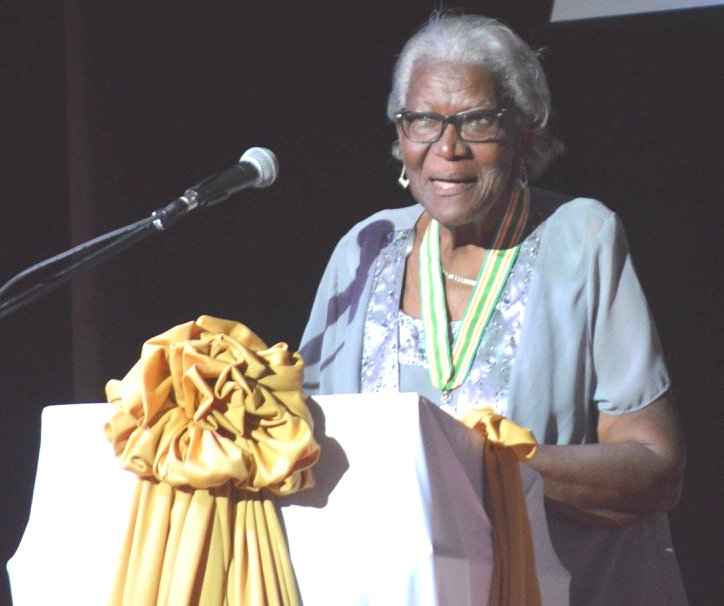
Teacher Elva accepts her Order of Distinction National Award on March 16, 2018 at the Montserrat Cultural Center.

DECORATED AND CELEBRATED

Teacher Elva was bestowed with several awards, including the Montserrat Badge and Certificate of Honor in 2004. In 2018 she was honored with the Order of Distinction during the Montserrat National Awards for her contributions in the areas of education, religion and community service. In 2021 she was recipient of a Mark Of Excellence Award by the Rotary Club of Montserrat.

On social media, many former students paid tributes and shared stories. Some explained how Teacher Elva tutored and motivated them to pass the Common Entrance Exam. Others lauded her teaching skills and humanity.

Ben Meade, son of Montserrat Premier Reuben Meade, shared a story from his time at Kinsale School. On one rainy day, Aymer’s Ghaut was gushing, making the road impassable and preventing some students from attending class. Some of the boys made toy boats and placed them in the stream. Suddenly they saw Teacher Elva approaching and they assumed they would be punished for playing in the water. Instead she taught them the proper method of making toy boats, then switched the lesson plan for the rest of the day to arts and crafts.

Photo courtesy Phillomagic Media
Mourners gather at the Bethesda Methodist Church in Cavalla Hill, Montserrat, on October 29, 2025.
WOMAN OF GOD

Teacher Elva’s career commenced at a time when virtually every primary school in Montserrat was affiliated with a church. The two entities were intricately linked and teachers were expected to always project a moral high ground. For this reason, many female educators of Teacher Elva’s era didn’t have children. Such was their dedication to the teaching discipline.

Teacher Elva’s faith was uncompromising, and she didn’t hide her spirituality.

“She would always tell people to pray and read their Bible,” James said. “She would say, ‘I talk to God all the time. God is my best friend.’ “

During the homegoing service, a contingent of students and faculty from St. Augustine Catholic School delivered a touching tribute by singing My Grandfather’s Clock. The song, originally written in 1876, tells the story of a clock that was purchased at a man’s birth and worked perfectly for 90 years – Teacher Elva’s exact age at her passing. The lyrics were slightly altered to honor an old woman rather than old man.

The clock has stopped ticking for Teacher Elva.

But she leaves a legacy as one of the greatest figures of her time.

Opinion: Jim Allen gets tribute of a lifetime – but it’s from the wrong country

5
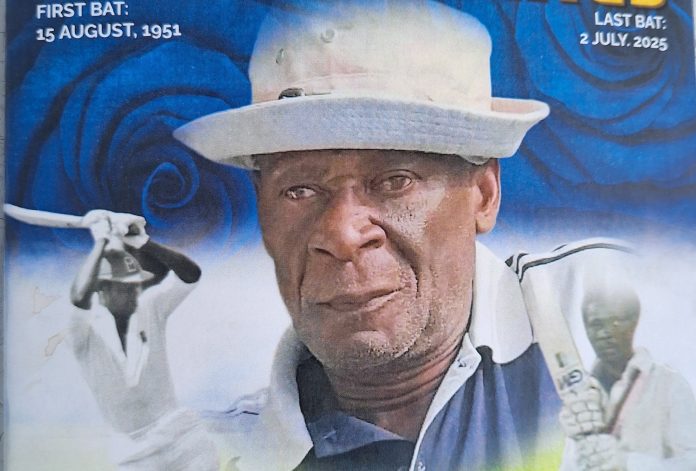
Cover illustration by Sonia Allen
Jim Allen, Montserrat's greatest cricket player, was celebrated by former teammates and rivals alike during his homegoing.

Jim Allen was a difficult man. On the cricket field he was difficult to get out. Away from it he was difficult to figure out. And he was often difficult to deal with. But his place in the annals of Montserrat history is easy. He is the island’s greatest sportsman and second-most famous public figure after Alphonsus “Arrow” Cassell. Along the journey to personal achievement some people end up inspiring a nation and a generation. That was Jim Allen.

On a muggy Wednesday afternoon, August 6, 2025, the Right Honourable Charles “Henry” Jim Allen was sent off to his glory by his country. The service was held at the Montserrat Cultural Center, the island’s primary indoor venue. A facility that can accommodate more than 400 people was less than half-full – or half-empty depending on one’s perspective. It defeated the purpose of holding the event in the spacious Cultural Center in the first place and was not a good look.

The two-hour-plus service featured rousing tributes, poignant gospel renditions, a video vignette of Jim’s cricket career and a searing sermon by Pastor Simon Peter Buffonge. It was highlighted by the presence of cricket legends Sir Viv Richards and Sir Andy Roberts of Antigua, both of whom played with and against Allen during the halcyon era of West Indies cricket in the 1970s. During a brief tribute Sir Viv reminisced about his batting partnerships with Allen.

“When you have two guys in a team who are as fearless as Jim and Vivian I guess it’s gonna cause a lot of problems for bowlers around the world,” said Viv, who played with Allen on the Leeward Islands and Combined Islands teams as well as the West Indies squad that competed at World Series Cricket (Kerry Packer) in Australia.

The Antigua contingent included former players Hugh Gore, Enoch Lewis and Ulysses Lawrence. So effusive was their praise of Allen that some observers said the Antiguans showed more reverence to Allen than his own countrymen. Lewis even suggested that if the service had been held in Antigua it would have drawn a packed crowd. Perception often trumps reality, and the fact that the audience for Jim’s homegoing included the iconic Viv and Andy but was missing Montserrat’s Premier, Governor and at least four members of Parliament was palpable.

Photo by Edwin Martin
Sir Viv Richards: “It was really a privilege knowing Jim.”

IT’S COMPLICATED

A recurring theme during the service was the plea for Jim to be honored in some tangible form, whether a statue, street name or monument. In Nevis, the main cricket park is named for Elquemedo Willett, another of Jim’s contemporaries. Sir Viv’s name adorns the main stadium in Antigua.

In 2008 there were plans to name the cricket field in Little Bay after Jim Allen. But the plan fell through. Jim, for better or worse, was never enamored by accolades. He stated emphatically: “Me no want no park name after me!” But his exhortations were fueled more by anger than humility.

Many cricket stars have struggled to transition following their careers. Jim worked for many years with Montserrat Public Works driving a grader. When he retired from cricket in 1984 his dream was to coach the national team. When the post of Sports Officer was available some years later, Jim assumed he would be an obvious choice based on his achievements on the cricket field. But the job encompasses more than just coaching cricket. It requires budgeting, managing, collaborating locally and regionally and also coaching in schools. Jim, who possessed only a primary education, was told that he had to apply for the position. He was taken aback but applied anyway. He was still turned down.

“They told me I didn’t have any qualifications,” a seething Jim said in 2016. “I told them I played in England, I played in Australia. That’s my qualification!”

A former president of the Montserrat Cricket Association once revealed part of the reason why Jim was turned down. “He had a reputation as a drinking man. And you can’t have that when you’re working with children.”

Asked if he was more hurt, angry or disappointed, Jim said: “Everything roll up into one.” The government instead gave Jim a position with Her Majesty’s Prison. He despised the job and performed it with frivolity. “Dem send me a jail,” he often said, speaking as if he were a prisoner and not an officer.

Photo by Edwin Martin
Jim Allen at his apartment in Lookout Village in 2017.

The coaching snub and prison stint sent Jim into a resentful tailspin and he declared that he wanted nothing from the government. “If it’s from the people of Montserrat, yes,” he said. “But not politicians.”

When one is consumed by bitterness they assume a character in order to shame those who they feel has wronged them. Break character and it sends a signal that all is forgiven. In 1999, the Jim Allen Lecture Series was created in his honor but Jim rarely attended the annual event that coincided with his birthday. In 2020 when he was awarded the Order of Excellence during the Montserrat National Awards he skipped the ceremony. He also spurned the aforementioned Little Bay Field tribute. Jim Allen essentially cut off his nose to spite his country’s face.

So the fact that a “Jim Allen Drive” does not exist on Montserrat is a two-way street. However, the back story cannot erase the tale of Jim’s cricket prowess and national impact. He deserves to be honored. Death has rendered moot whatever animosity Jim carried to his grave, but his legacy must be immortalized by his country.

END OF AN ERA

In 2010, Montserrat calypsonian Herman “Cupid” Francis composed a song declaring that he would like to be “dead before I die.” The lyrical gem told the story about a man curious to see and hear the public’s reaction to his death.

It’s intriguing when one wonders how Jim Allen would have reacted to his homegoing. He surely would have been flattered by the presence of Viv and Andy, his erstwhile cricket frenemies. He would have been heartened by the front-row presence of his children, son Davon – who became a cricket standout in his own right – and daughter Kae, a United States military veteran who participated in combat missions in Iraq and Afghanistan. He would be comforted to know that his pallbearers were all current Montserrat cricket players, too young to remember Jim’s playing days but mature enough to appreciate them.

Following Jim’s interment at the Lookout Public Cemetery, the mourners returned to the Cultural Center for the repast. They were treated to a fully-stocked bar, Styrofoam cups of goat water (plus roll) and other local cuisine. Men in their 70s and 80s argued vehemently as they recalled playing against Jim in the local leagues. Some rekindled stories of dismissing Jim at the crease, cradling the memory like a badge of honor. They too will eventually join Jim in the hereafter, and as the generations turn over and memories become dimmer, the legend of Jim Allen will fade further into the background.

In the days following the service, the post-mortem of Jim’s homegoing continued, on local radio and social media. The sparse attendance at the Cultural Center was the main source of consternation. Jim’s homegoing was not declared a national holiday or even a half-day. His coffin was not draped with the national flag. Some felt the disrespect that Jim encountered in life had carried over to his death. Sometimes home is where the hurt is. But although the crowd at the Cultural Center was a mere 150 or so, the streaming of the ceremony on YouTube told a different story. It underscored the sentiment that Jim was more appreciated abroad than at home.

As of Friday, August 8, 2025, the service was viewed more than 11,000 times.

Photo by Edwin Martin
Montserrat cricket player Damion Williams, who hails from Jim Allen’s village of Harris, holds a photo of Jim following the funeral service.
Photo by Edwin Martin
Jim Allen’s sister Sarah stands behind his final resting place at the Lookout Public Cemetery.

WATCH JIM ALLEN’S HOMEGOING SERVICE

https://www.youtube.com/watch?v=r4cubOlZq5E&t=7862s


WATCH A 2012 INTERVIEW WITH JIM ALLEN

https://www.youtube.com/watch?v=u_tHx4HVEkM&t=165s

PURCHASE JIM ALLEN’S BIOGRAPHY

Jim Allen’s life story is chronicled in the book Stranded Batsman, available at Amazon.

RELATED STORIES

Jim Allen’s final innings: Montserrat’s greatest cricketer dies at 73

In 1979, Montserrat’s Jim Allen was part of cricket history. It’s a colorful story.

Jim Allen cricket highlights from Kerry Packer

Montserrat’s Alford Corriette, a Caribbean cricket standout, dies at 74

Cricket icon Basil Morgan has dedicated 60 years to the game, and country, he loves

Jim Allen’s final innings: Montserrat’s greatest cricketer dies at 73

3
Photo by Edwin Martin
Jim Allen in his apartment at the Warden Assisted Facility in Lookout, Montserrat, on March 23, 2017.

The Right Honourable Charles Henry “Jim” Allen, who emerged from a tiny village in Montserrat and took his cricket talents across two continents, died Wednesday, July 2, 2025 at Glendon Hospital. Allen, who had been hospitalized several times in recent months, was 73 years old.

“I can’t believe Jimmers is gone,” said Basil Morgan, Allen’s longtime friend, former neighbor and ex-teammate. “Just today I was going over some of his cricket stats and talking about the Jim Allen Lecture Series that we just brought back. And then someone phoned me to ask if it was true that he died. My head is just not straight right now.”

Tributes poured in on social media and on Radio Montserrat, and calls were renewed for the cricket field at Little Bay to be named for Allen.

Allen earned international fame for his cricketing skills. After playing League Cricket for his village team in Harris, he joined the Montserrat national team two months shy of his 18th birthday. Selected as a wicket-keeper, he scored only four runs in his debut against Nevis in Antigua on June 9, 1969. Two years later he was the best player on the team.

For much of the 1970s, crowds flocked to Sturge Park just to watch Allen bat. Although the Montserrat team saw limited success, Allen stood out with his aggressive, hard-hitting drives. He stood only 5-foot-9 and weighed about 160 pounds, yet he unleashed towering shots that were the byproduct of superb timing and power.

Fitzroy Buffonge, who grew up watching Jim play and was later his teammate, once said of Jim’s batting prowess: “What Jim has can’t be taught. What the average man craves, he has naturally.”

Mike Findlay, a former West Indies player who was Allen’s captain for Combined Islands, said he was saddened by Allen’s passing. Speaking from St. Vincent, he said: “Jim was a fantastic man and a very good batsman. In the early stages he produced more runs than Viv Richards. It was unfair that he didn’t make the West Indies team. He was a good team person and we got along quite well. We had a deep respect for each other. I want to convey condolences to his family.”

Photo courtesy Sarah Allen
Jim Allen, left, with mother Missy Allen and brothers David and George, circa 1959.

A STAR IS BORN

Charles Henry Allen was born August 15, 1951 in Harris Village to John “Handsome” Allen and his wife Matilda, better known as Missy. Jim was the last of the couple’s four children. The eldest was David, also known as Palmer, followed by Sarah and George, who would also leave his mark as a standout cricket player.

As a baby, Allen was beset by sores all over his body. Every remedy his parents tried failed. One morning their neighbor, Miss Bessie Mulcare, told the Allens she had a dream about a deceased man who used to clean the roads in the village. His name was Jim Brim. Miss Mulcare said Jim Brim told her in the dream that the baby should be named after him or else he would die. Miss Mulcare then lifted the ailing boy and addressed him as “Jim Brim.” Almost miraculously, his sores disappeared – but the name “Jim” remained.

Jim’s father migrated to England in 1955 with the intention to work and eventually return to Montserrat. He passed away in London in 1965 from a heart attack at age 57. Jim’s brother David (Palmer) migrated to the UK in 1960 and still lives in Oxford.

Jim attended St. George’s School in Harris. The school assumed his given name was James, so he went through school as James Allen, a mistake that wasn’t corrected. When Allen began playing cricket he was erroneously listed as “James Charles Allen” in cricket statistics and archives.

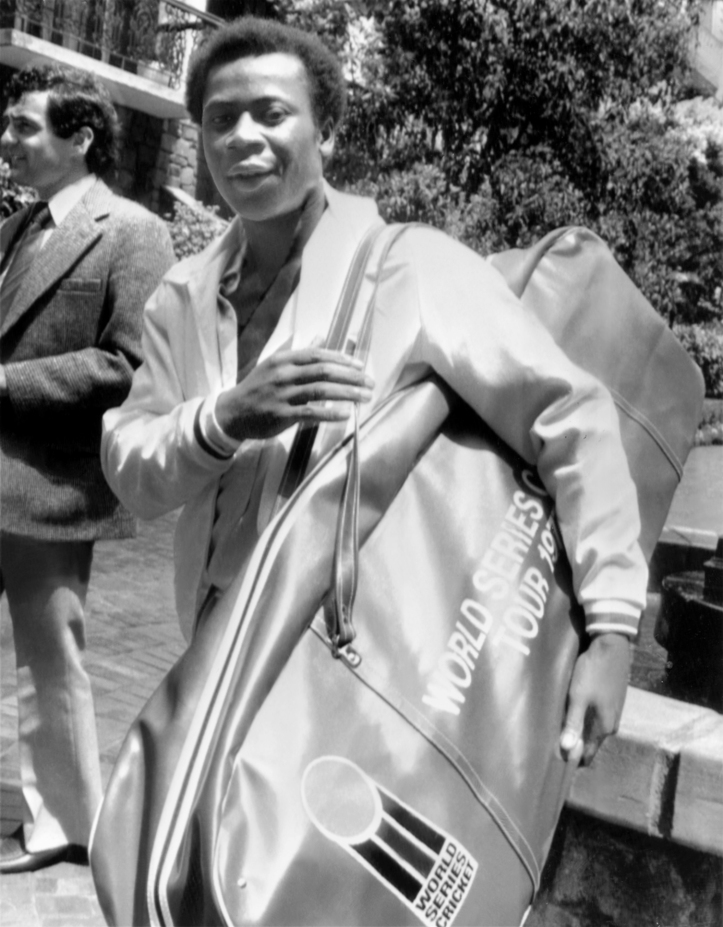
Photo courtesy Channel 9 Australia
Jim Allen arrives in Australia for World Series Cricket in late 1977.

HAVE BAT, WILL TRAVEL

At age 20 and coming off a century against St. Kitts in the 1971 Leeward Islands Tournament, Allen was selected for the Leeward Islands team. After scoring 82 against the Windward Islands in Dominica, he was picked for the Combined Islands squad. That meant he was only one step away from joining the prestigious West Indies team. His dream would not be realized, however, due to a number of reasons.

At the time the Caribbean was packed with cricket talent, and the big four nations – Barbados, Trinidad, Guyana and Jamaica – controlled the board of selectors. Cricket in the small islands was viewed as inferior, and players had to be exceptional to make the West Indies squad.

Allen’s best season for Montserrat came in 1972. In the first two matches of the Leeward Islands Tournament he scored 153 and 51 – both not out – against Antigua, which featured future legends Viv Richards and Andy Roberts. He then scored 165 and 10 – both not out again – against Nevis. He entered the final match against St. Kitts on 379 unbeaten runs but scored only 16 and 14 as Montserrat – stymied by some nefarious umpiring lost a heartbreaking bid to win the Shield. The late Bennette Roach, Montserrat’s captain that year, said during an interview in 2016 that after the match he couldn’t find Jim. “I finally found him in the bathroom crying,” Roach said. 

Allen especially excelled against Antigua, posting an average of 79.88 for his career. He is the only player in Montserrat history to score a century against Antigua on its home ground.

Allen and Alford Corriette were the best players for the Montserrat team in the 1970s. Corriette also played for Leeward Islands and Combined Islands. There was an unspoken rivalry between the two, especially with Jim hailing from the country and Corriette from Plymouth. Corriette died January 2, 2023 in New York.

Photo courtesy Trinidad Express
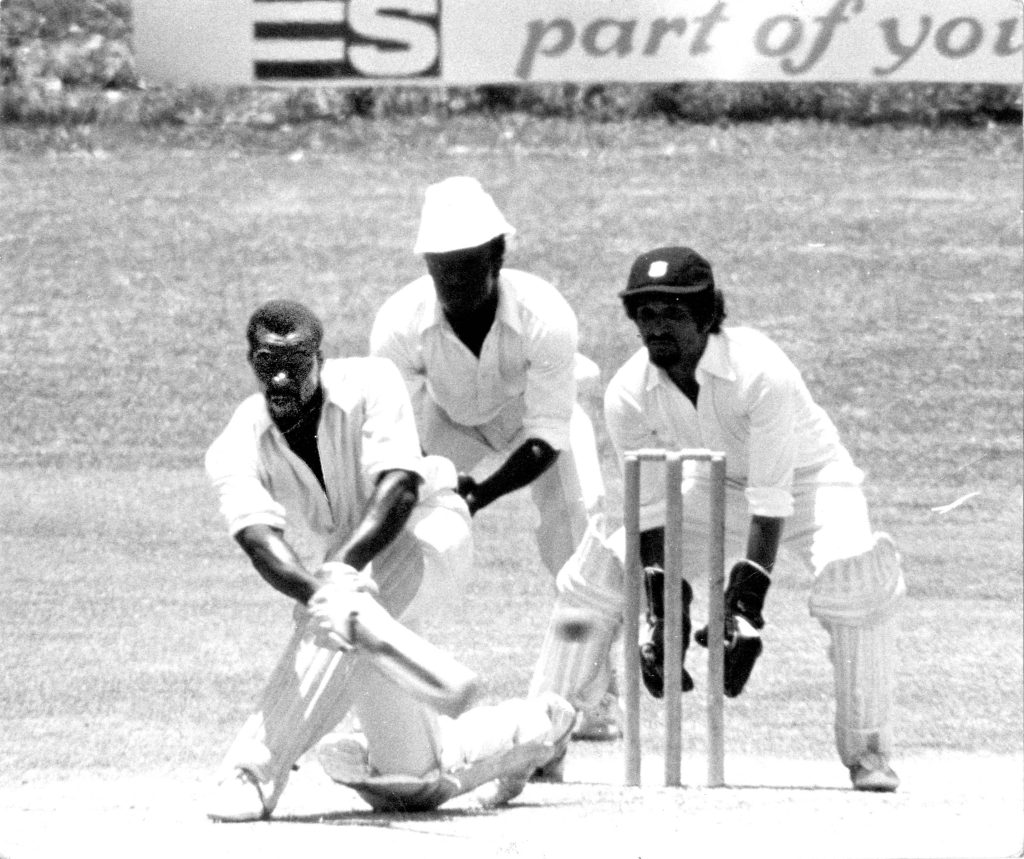
Jim Allen, playing for Combined Islands, hits a sweep shot against Trinidad in a Shell Shield match in 1979.

At the first-class level Jim smacked five centuries, including two against Barbados and a torrid 161 against Jamaica. In 1975 he scored 96 runs for Combined Islands against Trinidad in an exciting Shell Shield match that ended in a draw. The match was dubbed the “Tanti Merle match” after Trinidad storyteller Paul Keens-Douglas used it as the backdrop for his famous recording Tanti at The Oval.

Elquemedo Willett of Nevis was Jim’s teammate with Combined Islands when Jim scored 161 against Jamaica in Grenada in 1979.

“We were batting together,” Willett said. “Jamaica took the second new ball and Jim beat them all over the place. I couldn’t believe it. It’s like he went crazy. They couldn’t put any fielders close to him. He was a very good player, very aggressive. He stood out. He should have made the West Indies team. I’d like to express my sympathy on behalf of myself and my family.”

Allen’s brother George, who was two years older, was his teammate on Rivals, their village team, plus on the Montserrat national team, Leeward Islands and Combined Islands. George, who joined the Montserrat team in 1966 and played his final season in 1981, was a terrific all-rounder who bowled a tidy medium pace. George died on September 20, 1990.

In 1977, Jim was selected for the West Indies team that would play in World Series Cricket, also known as “Kerry Packer” for the man who organized it. Allen played two seasons in Australia – and also played matches in Tasmania – against the best cricketers in the world, scoring a century in 1978. He was part of cricket history in 1979 when West Indies played Australia in the first match in which players wore non-white uniforms.

One of the brightest moments of his career came at Sturge Park, his home ground. On January 13, 1977, Combined Islands played Guyana in the Shell Shield tournament. Allen, the only Montserrat player in the match, scored 150, including 21 fours and one six. He struck a few highlight shots off future West Indies fast bowler Colin Croft. The match began on a Thursday, and when news of Allen’s heroics was heard over the radio, many civil servants ditched work and raced to Sturge Park. So did a number of school children.

From 1977 to 1983, Allen played each summer in central England for the Hyde Cricket Club of the Lancashire and Cheshire League. He also played one season with Werneth, Hyde’s rival. He scored 11 centuries for Hyde, which remained a team record as of 2024. He scored three centuries for Werneth in his only season with the club.

Channel 9 Australia
In 1979, Jim Allen played for West Indies against Australia in World Series Cricket in the first match to feature non-white uniforms. CLICK HERE to read the story.

DEVASTATING INJURY

In May of 1981, Allen sustained a serious injury when he was struck in the right eye during batting practice. He underwent surgery and resumed his career while wearing contact lenses but was not the same. He displayed occasional flashes but mostly struggled and showed trepidation at the crease against fast bowling, which he feasted on during his prime. He played his final match for Montserrat in 1984, scoring just four total runs against Nevis.

“Going back to play cricket after my eye injury was pure stupidity,” Jim said during an interview in 2012.

In 1988, Allen got a job as a prison officer, a position he held for seven years. Following the volcanic eruption in Montserrat in 1995, he relocated from Harris to the North and lived in a small home in Peaceful Cottage. In 2013 he was relocated to the Warden Assisted Facility in Lookout, where he lived out his final years.

In 1978, Allen was awarded an MBE (Member of British Empire), and on March 8, 2020, he was presented with the Order of Excellence during the Montserrat National Awards.

Photo by Edwin Martin
Jim Allen, center, and a couple of friends during Cork Hill Reunion on March 19, 2017.

QUITE A CHARACTER

Away from the cricket field, Jim was known to be a prankster with a wry sense of humor. He also didn’t hide the fact that he was a hard drinker. A friend saw him one morning and asked if he had eaten breakfast. “Of course not,” Jim replied. “The rum shops haven’t opened yet.” 

In the summer of 1978, Jim played with the Hyde Cricket Club in England. He lodged at the home of Peter and Lily Hardman in Stockport. One day Jim received a phone call from Frank Edwards, president of the Montserrat Sports Association. Edwards delivered great news. Jim had been awarded the MBE. After finishing the call, Jim turned to Lily Hardman.

“They said I just got an MBE. What’s that?” 

Lily Hardman: “It’s a very prestigious honor. It’s from the Queen!”

Jim: “How much is she gonna pay me?”

Jim’s cricket acumen was underrated. He often discussed the nuances of the game at length. He once revealed that being a wicket-keeper was vital to his batting because while standing behind the stumps he could “see how the ball is behaving.”

He said his biggest regret is missing out on playing for the West Indies team in an official Test match. “I came very close but something failed me,” he said, adding that he thinks about it “all the time.”

Allen is survived by his son Davon Williams, daughter Kae Blossom Williams, sister Sarah Allen, brother David “Palmer” Allen, three grandchildren, one great-grandchild and numerous other family and close friends. 


“A-WE JIM”

Jim Allen’s heroics for Combined Islands against Guyana in 1977 at Sturge Park elicited this classic poem by Montserrat’s Ann Marie Dewar.  

What a carry-on a Sturge Park,

How de crowd a stomp an roar,

Combine Islands a play Guyana,

An a-we own Jim tap de score!

Some a you nuh mi born yet,

An me len you me sympathy,

For nutten coulda beat a-we joy dat day,

De joy Jim gi a-we!

Marmie-oh! Lek water from a bus pipe,

Lek bullet from a gun,

Lek how long-foot Sue make baby,

A so Jim put on run!

You should-a hear how Montserrat neaga,

Shout an clap out dey a Park,

You should-a see how a-we proud-off,

When Jim reach de hundred mark!

When Jim a bat he nuh mek joke,

Cricket ball a fly all over,

Slip, mid-on, bound’ry, square leg,

Fine leg an’ extra cover.

What a thing fo’ poor Guyana,

Dem try dem bes’ keep down de score,

But no matter wha’ dem do, a-we Jim,

Jus a hit nuff six an four.

Dem talk bout Jim ‘unorthodox stance’,

But dat nuh baddoo he,

Wid he han pan he bat, an he y’eye pan de ball,

He win de match wid one-fifty.

If Jim didn’ pick pan Combine,

Is how Combine would-a cope?

When Guyana man confront dem,

Is pan Jim dem heng dem hope.

Years after dat, wan ole man tell me,

Fo’ mark he words – an he mean

dat West Indies would-a beat Australia,

If Jim mi pan de team.

Every time me rememba, me proud until,

Me heart cyan full no more,

Combine Islands play Guyana,

An a-we own Jim top de score!


LISTEN TO LET JIM PLAY BY WRANGLER (1982)


LISTEN TO JIM ALLEN THE GREAT BY UNDERTAKER (2013)


Fine Twine, Part 2: Montserrat’s most famous felon goes from wanted man to working man to Englishman

0
Joseph "Fine Twine" Bramble had a rap sheet in Montserrat that spanned five decades.

Part 2 of a two-part series.

The criminal history of Joseph “Fine Twine” Bramble stretched from 1951 to 1992. He was arrested or fined 20 times in Montserrat, faced a total of 41 charges and served at least 20 years in jail. For a six-year period between 1975 and early 1981, Bramble’s record was clean. But that’s because he was behind bars. Some of his offenses over 41 years were serious, such as the iniquitous sexual assault in 1963. Others were frivolous, such as “larceny of a bath towel” in 1981. Late that year Bramble was sought by police for questioning and again went on the lam. This time his apprehension was not without incident.

Police enforcer Stanford “Gingerbread” Martin was teamed with veteran officer Arthur Lewis to find Bramble. This Martin & Lewis duo was no comedy team. They meant business. Martin said he and Lewis tracked Bramble to the slopes of Garibaldi Hill and found him sleeping in a cave-like structure under a large rock. When Lewis called out his name, Bramble reportedly tried to escape while holding a cutlass. Martin said he shot Bramble in the forearm near his right elbow with a .38 revolver.

“I shot him and he fell, and I picked him up and handcuffed him,” Martin said. “The bullet broke a bone in his arm but went right through. That’s the first time I ever saw somebody get shot and didn’t bleed.”

Bramble was booked, then taken to Glendon Hospital to treat his wound. Martin, who years later became a certified firearms instructor, explained that he had extra motivation to catch (and subdue) Bramble.

“I was out every night looking for him,” Martin said. “It was coming close to Christmas. I said to myself, ‘When everyone is in Sturge Park having fun I’m going to be up in the hills looking for him – and he might be in the park among the crowd having fun too.’ It was impossible to catch Fine Twine on foot. He was too fast. So I decided he’s not getting away this time.”

Speaking of Sturge Park, eight years earlier – while Bramble was at large for 18 months – the park located between Richmond Hill and the public cemetery became the site of some improbable drama. In early December of 1973 during the Festival calypso eliminations, William “Ruler” Murrain sang Fine Twine, a song he wrote about Bramble’s exploits. The first verse:

Want every woman to take this warning,

Tall black man out like a haunting ghost,

That have the women them running afraid,

Any time that he would approach,

He right by the back there hiding,

Tell you girlfriend to stay home at night,

Stop go pictures and dancing,

Cause me sure he go out you light

The song became an instant hit, and it was spiced up by a controversial sighting. Some spectators who attended the show said they saw Bramble in the park. The Montserrat Mirror newspaper reported that there were rumors that Bramble hid under the stage. Kenneth “Mighty Fisher” Fenton, who also performed in the show, says Fine Twine ran past the stage during Ruler’s performance. Tall tales are common in Montserrat, and stories are sometimes embellished for effect. But when pressed about his claim, Fisher was adamant. “I know what I saw!”

LISTEN TO FINE TWINE BY MIGHTY RULER

Photo from Montserrat Mirror archives
This police mug shot, circa 1962, is the only known photo of Joseph “Fine Twine” Bramble.

PAYING HIS DUES

Following the 1981 incident in which he was shot by police, Bramble was jailed again. During his sentence one of the prison officers was his nephew Reuel, who joined the H.M. Prison staff in 1978. It made for a bit of an awkward situation but Reuel said his uncle performed constructive work while incarcerated.

“He used to build coffins for pauper funerals,” Reuel said of Bramble, a self-taught carpenter who once built a small house in Delvins. He also designed model ships and other items out of wood such as decorative fish.

Bramble spent most of the early to mid-1980s behind bars thanks to charges such as larceny – his most common offense – and “found on premises for unlawful purpose.”

“He became a soft target for the police,” said Noel “Atiba” John, Bramble’s nephew. “Arresting Fine Twine became like a badge of honor for them. They would charge him with a crime, which most times he didn’t do, and he would appear in court with no lawyer and end up in jail. So he basically became like an institutionalized person.”

It’s likely accurate that Bramble was charged with some crimes he didn’t commit due to his reputation. But logic also says he likely also committed crimes in which he was not caught. One former policeman said Bramble was suspected in several sexual assaults but the victims were ashamed to report them.

GAINFULLY EMPLOYED

By 1987 Bramble was a middle-aged man and had mellowed. Some younger miscreants had inherited his title as Montserrat’s most wanted. Around that time he was hired by Montserrat Water Authority. One of his supervisors was Rupert Weekes, a former police officer and politician who represented the Northern District in Montserrat’s legislature from 1996 to 2001. Weekes later became an ordained Methodist minister after migrating to England.

Weekes said during his time at Montserrat Water Authority he oversaw a project in which water pipes across Montserrat that were installed by a Canadian company had to be stripped and repainted. He said Bramble was a hard worker who was also savvy and proficient. He recalled one feat in particular.

There was a ghaut (ravine) between Gingoes Village and St. Patrick’s in the south. The ghaut was about 30 feet deep, and above it was a suspended water pipe that stretched about 80 feet. Weekes said he told his workers not to repaint that section because it was too dangerous. It was a Friday. Weekes said when he showed up to work Monday the entire pipe had been stripped and repainted . . . by Bramble. Weekes was amazed.

“When I asked him how he did it he wouldn’t tell me,” Weekes said. “But I assume he used a rope and [worked his way across the pipe]. In my 52 years of employment he was the most clever person I ever worked with.”

Weekes said Bramble also had a generous side. “He knew I liked avocados, so every Monday he would bring me three or four avocados. I would say to him, ‘Boy, where did you get these from?’ He would just laugh and tell me to mind my business.”

“He liked when he was feared because fear brings respect. But a lot of it was just bravado.”

– Noel “Atiba” John, Fine Twine’s nephew

‘FINE TWINE’ TO ‘MR. BRAMBLE’

In October of 1997, Bramble – at age 62 – migrated to the United Kingdom along with thousands of other Montserratians during the volcanic crisis. He settled in Leeds, about 200 miles north of London. He first resided in a hostel, then got his own flat. During his time in Leeds he enjoyed watching cricket on television or hanging out at a local pub called Skinners Arms. He also attended church. He enjoyed a good smoke – real cigarettes and the funny ones as well. By all accounts he was a model citizen in Britain.

“The most stable time of his life was when he came to England,” said Atiba, who also lived in Leeds and became his uncle’s unofficial caretaker. “He would visit London with us when we had big trips. He would attend funerals and also go to Dalston and Ridley Market.”

Bramble tried his best to shed his unsavory past once he crossed The Pond, and it helped that he lived in an area where he was rarely recognized. He upgraded his attire, opting for two-piece suits and cowboy boots. He also requested to be addressed as “Mr. Bramble” and not “Fine Twine.”

Sylvia Whyke-Farrell, a veteran educator from Montserrat who is Bramble’s cousin, also resided in Leeds.

“I saw him downtown one day,” she said. “He was dressed in a three-piece suit, looking really nice. I said, ‘Twine, you look great, man. Where are you going?’ He grumbled that I should call him Mr. Bramble – and he never spoke to me again.”

Photo credit: “Secret Leeds” website
Joseph “Fine Twine” Bramble frequented this pub, Skinners Arms, during his time in Leeds.

LIFE AND TIMES

Montserratians who migrated during the volcanic crisis were assessed upon arrival in Britain, and many were offered adult education classes. Bramble, who did not complete primary school but was literate, reportedly took computer lessons and would tell people, “You can reach me at josephbramble@hotmail.com.”

In 2008, Bramble returned to Montserrat for a visit. His nephew Atiba said Bramble arrived with a “coil” and visited several bars, including the popular Desert Storm in Salem. “He would put a 50-pound bill on the bar and tell the bartender to give everyone a drink,” Atiba said. About a month later, the coil was no more. Bramble even missed his return flight to the UK due to a date mix-up and required financial assistance when he had to reschedule.

After returning to Leeds he was diagnosed with Alzheimer’s disease and also battled diabetes. He was moved to the Oaklands Residential Home, which provides care for adults with dementia and other disabilities. “At the end of his life he couldn’t speak and he couldn’t recognize anyone,” Atiba said.

On Tuesday, October 12, 2010, Joseph “Fine Twine” Bramble died at 75 years old. His funeral, held at a local crematorium, was attended by only five people. The service was led by Rev. Weekes, Bramble’s old friend and former boss at Montserrat Water Authority. “They gave us only 15 minutes,” said Weekes, who said he assured that Bramble received a dignified sendoff. Bramble’s ashes were scattered at Harehills Cemetery in Leeds.

Photo: Oaklands Care Home website
The Oaklands Care Home in Leeds was Joseph Bramble’s final residence before he passed away in 2010.

THE LEGACY

Bramble never married or had a long-term relationship but reportedly fathered a daughter. The man who spent much of his life in courtrooms would often hold court with friends later in his life and discuss his adventures. He told one friend he deserved an award for his 18 months on the run between 1973 and 1974, which he says is a record.

Years following Bramble’s death, the name “Fine Twine” still comes up in conversations and on social media. Almost everyone from Delvins and Cork Hill have a “Fine Twine” story. He is forever etched in Montserrat lore. The song by the Mighty Ruler has also helped to preserve his legacy. It’s a legacy that remains open for debate, and the contrasting opinions about Bramble exemplify the paradox of man. The same person that some describe as a “legend” and “gentle man with a great sense of humor” was also deemed “terrifying and menacing” by others.

Atiba says that although his uncle was no saint, he was greatly misunderstood.

“He liked when he was feared because fear brings respect,” he said. “But a lot of it was just bravado. I loved my uncle. I didn’t love his ways. But I loved him.”

Said Weekes: “I think Fine Twine was a man who made a mistake early in life and then continued to play the part. In Montserrat you make one mistake and you’re stigmatized. Fine Twine was not a bad man. But he liked the fact that people believed he was a bad man.”

The manhunts, arrests, escapades and public angst are all history now.

So is Fine Twine.


Trivia: Fine Twine shared the same birthday (November 16) as Alphonsus “Arrow” Cassell.


CLICK HERE to read Part 1 of the Fine Twine story.


William “Ruler” Murrain performs Fine Twine during Montserrat Festival in 2002.
William “Ruler” Murrain briefly discusses his song Fine Twine during a 2012 interview. Ruler died in 2021.

Fine Twine, Part 1: The story of how a boy from Delvins Village became Montserrat’s most notorious felon

0
Joseph "Fine Twine" Bramble had a rap sheet in Montserrat that spanned five decades.

Part 1 of a two-part series.

At approximately 3:30 a.m. on Saturday, November 2, 1974, Joseph Bramble was arrested after evading police for more than a year in Montserrat. He was apprehended near the Fort Ghaut Bridge in Plymouth when officers – acting on a tip – set up a road block and nabbed him while he was a passenger in a vehicle. The fact that Bramble was caught in the heart of the capital was appropriate considering he had been hiding in plain sight for 18 months, managing to stay one step ahead of the authorities and virtually toying with them. He visited popular establishments and attended crowded events such as the annual Roman Catholic Fete. And he seemed to have an innate sense of when trouble was approaching.

“He was brilliant, a very clever guy,” said Reuel “Gibbs” Hixon, Bramble’s nephew. “He moved around like a cat. He would be hanging out in a bar and all of a sudden he would disappear – and then you would see police swarm the place.”

Bramble had several aliases – including “Coupie” and “Joe Biscuit” – but he was best known as “Fine Twine” due to his lanky stature. Dark in complexion, he stood 6 feet 2 inches with a wiry frame. His arrest brought relief to many residents and especially to the beleaguered Royal Montserrat Police Force, which at times resembled Keystone Cops during the manhunt. Bramble had been a person of interest in a number of crimes, including burglary, indecent assault and marijuana possession. The police even offered a reward of E.C. $1,000 – the equivalent of about $7,000 in 2025 – for information leading to his arrest.

The hunt for Fine Twine evolved into a regional task force, with a K-9 officer and police dog arriving from Guyana to assist with the search. Scotland Yard also joined the investigation, a former officer said. One month before Bramble was captured, Deputy Police Commissioner Paul Valdez issued an appeal through the Montserrat Mirror newspaper. He urged the fleet-footed fugitive to turn himself in and promised that any meeting would be cordial. “I will never condone, encourage or allow any adverse treatment to any person who is detained or wanted by police,” Valdez said. Bramble did not oblige Valdez’s request, and he appeared to relish his celebrity status.

Bramble was eventually caught on that early November morning two weeks before his 40th birthday. Four months later, on March 17, 1975, he went on trial with no legal representation and was sentenced to seven years in prison. Sadly, it would not be his last encounter with the law.

There have been a number of habitual offenders in Montserrat over the past century, but what made Bramble unique were his brazen exploits, elusive skills and complex persona. Montserrat Spotlight interviewed many people who knew Bramble: family members, police, neighbors, friends, co-workers. Some recalled him as a scary felon while others labeled him a petty thief who never engaged in a physical altercation. Nonetheless he became the usual suspect whenever there was a crime that fit his portfolio. Many facets of Bramble’s life were incredible and even comical, but his most serious offense – which occurred in 1963 – was no laughing matter, and it reverberated locally for decades.

So who exactly was the notorious perpetrator named Fine Twine?

Map of Montserrat shows Cork Hill, Delvins and Garibaldi Hill, the areas that Fine Twine most frequented.

STORY BEGINS IN DELVINS

Joseph Henry Bramble was born November 16, 1934 in Delvins Village, about a half-mile west of Cork Hill in central Montserrat. His father, Charlie Bramble, was nicknamed “Charlie Biscuit” – which explains why Fine Twine was called “Joe Biscuit.” Fine Twine’s mother, Christiana – best known as “Aunt Nan” – was a laborer who worked for a time at Dagenham Estate picking cotton. Fine Twine was the fourth of his mother’s five children. His elder siblings were Jane-Ann, Thomas and Katie. A younger brother, John, died young.

Fine Twine attended St. Mary’s School in Plymouth. His mischief began early. A former neighbor said “Twine” would remove the sharp aluminum straps from saltfish boxes and create a knife. He would then bore a hole on one end and run a long string through it. When he swung the knife it made a “woo-woo” sound, and he would terrorize and chase younger boys. From a young age, he was agile, lithe and slippery.

“He did things that people said they never saw before,” his nephew Reuel said. “He would climb a coconut tree and then come back down backwards.”

According to legend, Bramble was once caught atop a neighbor’s coconut tree. The angry owner stood at the base of the tree with rifle in hand. He shouted for Bramble to come down at once and threatened to shoot him. Bramble climbed down head-first . . . and the stunned owner ran off.

“He was brilliant, a very clever guy. He moved around like a cat.”

– Reuel Hixon, Fine Twine’s nephew

TROUBLE MAN

Bramble’s first brush with the law occurred in early 1951 at age 16 when he was arrested for stealing a fowl. He was sentenced to six months in jail. He was arrested four more times during the 1950s – usually for theft. Around 1960 he got a job working on a cargo ship. He sailed across the Caribbean, including to Trinidad, where his sister Jane-Ann resided. He told friends that he smuggled guns and liquor during his sailing days and served jail time in Trinidad and Guyana, adding that Guyanese jails were easily the worst.

By 1962 he was back in Montserrat – and back in trouble. He was arrested late that year for battery. The following year his name became forever notorious on the Emerald Isle. Bramble was arrested for sexual assault. The act itself was sordid enough, but what made it even more scandalous was the identity of the victim – the daughter of a prominent white estate owner. The victim, who was engaged to be married, was flown off island for medical treatment. She later identified Bramble during a police lineup. Her father vowed to kill Bramble and was even disallowed from attending the trial in Plymouth. On November 12, 1963, Bramble was convicted and sentenced to six years in H.M. Prison. He apparently was granted early release because by 1968 he was a free man.

Decades later, some remained skeptical about Bramble’s involvement in the sexual assault. They believed he was targeted because of his reputation. But a prison officer during Bramble’s incarceration said Bramble once described the encounter in graphic detail. Another source said Bramble admitted to the crime and even explained his motive.

Upon his release, Bramble, with no prospects for employment, resorted to what he did best – steal. On November 4, 1968, he was sentenced to five years for burglary. With his penchant for thievery, Bramble seemed to operate under a code: He rarely stole from anyone in the Delvins-Cork Hill area. The legendary American outlaw Jesse James was once asked why he robbed banks. “Because that’s where the money is,” he replied. Bramble mostly targeted tourists and expatriates. He would visit Foxes Bay, for instance, camp out in a tree, observe beachgoers and analyze where they stored their belongings, then break into their vehicles while they swam.

Stanford Martin served on the Royal Montserrat Police Force for a decade starting in 1977. He earned a “Dirty Harry” reputation for his aggressive policing and would often be handpicked by superiors to seek out criminals. Martin, nicknamed “Gingerbread,” recalled an incident in which a tourist was robbed of U.S. $400. He immediately suspected Bramble, so he visited a gambling house on George Street that Bramble frequented. When Martin arrived, Bramble was not there, so he asked the owner if anyone came by to gamble using U.S. currency. “Yes, Fine Twine,” the owner said. “He lost $100 [gambling] and said he was going for more money and come back.” Bramble was arrested with U.S. $300 in his possession and jailed after he failed to give a plausible explanation of how he acquired the funds.

The above article ran in the Montserrat Mirror newspaper on October 4, 1974, during Fine Twine’s time on the loose.

CATCH ME IF YOU CAN

The 18 months that Bramble eluded police between 1973 and 1974 featured some bizarre and funny stories and also illustrated the paranoia that Bramble caused for the public and police.

Cabey, the former policeman, grew up just across from Bramble’s family home in Delvins. He said it was awkward searching for a man he knew his entire life. Cabey spent “many sleepless nights in the trenches” looking for Fine Twine and encountered some unexpected hazards. He recalled “cooping” Fine Twine one day while hiding behind a hedge of long grass near a main road in Delvins. A passerby stopped at the side of the road – just feet away from Cabey – to relieve himself. But Cabey could not blow his cover. “The man almost [urinated] on me,” Cabey said.

News that Fine Twine was on the loose scared many women, especially because of the sexual-assault charge years earlier. Folks would lock up their homes at 6 p.m. and retire for the evening. Fine Twine became a proverbial Boogeyman, and his physical features added to his frightening mystique.

Inspector Arthur Lewis spent more than three decades with the Royal Montserrat Police Force. He said he was assigned several times to find Bramble. Asked if it’s ridiculous that one man could elude police for 18 months in tiny Montserrat, he responded: “Not really. Many people used to help Fine Twine hide because they used to gamble with him. The police can only do so much. They need the public’s cooperation.”

Speaking in 2024, one former policeman admitted he was afraid of Bramble after hearing stories about his habit of wielding a cutlass. Police in those days didn’t carry firearms except for special assignments, and Bramble made them look foolish at times. He told friends he would sometimes be perched in a tree and observe frustrated cops down below discussing the harm they planned to inflict on him when they caught him.

Charlesworth “Sonny” Phillip, a retired civil servant and former political candidate who grew up in Cork Hill, said he had several interactions with Bramble during the fugitive’s time on the run. Bramble often sought out fellow villagers, especially youngsters, to run errands.

“He was across from the Mission Church one day and he asked me to go to Fan Boston’s shop to buy him a carton of cigarettes,” Phillip said. “He gave me $100. I bought the cigarettes but when I got back he was gone. Here I was with the cigarettes plus about 80-something dollars in change for him. I didn’t know what to do. I was 8 years old. I ended up throwing away the cigarettes because I couldn’t let my mother know I went to the shop for Fine Twine. I held on to the money for many years. He never came back for it.”

“Many people used to help Fine Twine hide. The police can only do so much. They need the public’s cooperation.”

– Arthur Lewis, former police officer, on how Fine Twine evaded the law for 18 months

During his time in the wind, Bramble changed locations frequently to keep officers at bay. He slept in abandoned buildings, including an old estate house at Elberton near Foxes Bay. He navigated the Delvins-Cork Hill area with ease and knew the territory to a tee, which gave him an advantage over the cops. He would show up at homes of people he trusted – often at night – and get a meal.

Noel “Atiba” John, Bramble’s nephew, grew up with Bramble’s mother (Atiba’s grandmother). Although just a lad, he vividly remembers Bramble visiting the home while on the run in 1973 and ’74.

“Me and my grandmother would be home at night and all of a sudden we would see a small fire in the distance,” Atiba said. “It was my uncle cooking. Sometimes he would come by the house to get salt or something like that. But he never stayed for long.”

A SHOT IN THE DARK

Bramble’s clever tactics took a toll on officers, and so did the specter of his looming threat.

Hubert French, a former policeman, said he and another officer were dispatched to find Bramble in 1973. They were issued a rifle. The two officers staked out Cork Hill School after getting reports that Bramble was spotted in the area. Bramble would visit the unguarded premises at night to get water or use the restroom. But the officers’ search came up empty, so they went to Garibaldi Hill, which overlooks Delvins Village. They figured that Bramble would have to return home at some point.

French said he and the other officer camped out and waited. As day turned to dusk, both officers – while sitting not far apart – dozed off, with French’s partner holding the rifle.

“Suddenly we heard this loud shot, ‘Powww!’ “ French said.

The officers were jolted out of their slumber. It was dark. When they finally calmed down, French realized that his partner had pulled the trigger on the rifle by accident while asleep.

“It scared the hell out of me,” French said. “I thought Fine Twine was shooting at us.”


Click here to read Part 2: Fine Twine goes from wanted man to working man to Englishman.

SNEAK PREVIEW: Listen to songs profiled in the Montserrat-based book “Politicalypso”

0
"Politicalypso" contains intriguing back stories to some of the most popular political commentaries in Montserrat history.

The book Politicalypso, which chronicles the connection between politics and calypso in Montserrat, was published on October 21, 2024 on all Amazon platforms. Co-authored by Francelise N. White and Edwin L. Martin, the book profiles 25 impactful political calypso songs in Montserrat history. Each song is listed below, along with a sample recording (if available). The book provides a comprehensive back story about the evolution of each song with many interesting details. There is also a lyrical excerpt for every song. Here are the 25 songs that are profiled:

1. Lick Him Dr. Herbert, Alfred “Warrior” Christopher (1967): The song addressed Anguilla’s wish to end its coalition with St. Kitts-Nevis. What does that have to do with Montserrat? The book reveals several connections to the Emerald Isle. Note: The original recording was lost. Listen to a sample that was released in 2022 as part of a 1960’s Montserrat calypso medley.

2. PDP, Alphonsus “Arrow” Cassell (1971): The lyrics celebrated the PDP’s landslide election victory in 1970 and criticized William H. Bramble, Montserrat’s first Chief Minister, who was defeated by his son. It was easily the most contentious election in Montserrat history.

3. Hold On To Your Property, Alphonsus “Arrow” Cassell (1971): Montserrat’s real-estate boom in the 1960s was both beneficial and controversial. Many thought the “land by the shores” should be reserved for locals. W.H. Bramble opened the door to foreign investors, but there was a catch.

4. Bull Water For Power, John “Black Prince” O’Garro (1973): The song focused on a broken promise by politician Joshua “Joshie” Weekes of St. John’s during the 1973 election. It’s a funny story with a sad ending. Note: The song has disappeared from the archives. Lyrical excerpt available in the book.

5. PDP Must Go, James “Oh! Ryent” West (1977): The calypsonian called for the Austin Bramble-led PDP administration to be kicked out of office. The song was banned by Radio Montserrat, West was almost arrested, and the song caused a rift with some family members.

6. Manifesto, Justin “Hero” Cassell (1984): Hero adopts the persona of a typical politician who promises utopia amid their desperation to get elected. The book also reveals how the refrain, “Can you hear me? Can you hear me, people!” originated.

“Manifesto” helped Justin “Hero” Cassell win the OECS calypso crown in 1986.

7. Leggo Me Bulldog, William “Ruler” Murrain (1984): The veteran calypsonian issues a dire warning to any politician planning to visit his home to lobby for his support.

8. Play Little More, Austin “Ratamba” Howe (1984): One of the most creative social and political commentaries in Montserrat history, sprinkled with a nursery rhyme twist.

9. De Priest, He Gone, Richard “Bachelor” Weekes (1986): Anglican Priest Father Alson Percival, a native of St. Kitts, was jettisoned from Montserrat for speaking out against the government’s plan to build a casino. Note: The song was banned on local radio and has disappeared. An excerpt of the lyrics is available in the book.

10. What’s Inside The Box, Herman “Cupid” Francis (1987): The writer crafts a song focusing on a ballot box controversy during the 1987 national election but introduces another angle. Note: This song was also banned. An excerpt of the lyrics is available in the book.

11. They Don’t Care, Everton “Reality” Weekes (1989): The singer shares the despair and suffering that took place in the aftermath of Hurricane Hugo and how everyone seemingly had to fend for themselves.

12. Whey de Galvanize, Justin “Hero” Cassell (1989): Hero won the crown with this classic about the galvanize controversy that occurred following Hurricane Hugo. Who was the real culprit?

13. Power Brokers, Earl “Hustler” Browne (1990): Politicians were not the only target of this commentary by Hustler, who went after anyone in authority in Montserrat who was abusing power. The book also reveals the interesting story about Hustler got his calypso name.

14. Dear John, Curtis “Buck” Francis (1991): The song thanked Chief Minister John A. Osborne for his 25 years of service after Osborne lost in the 1991 elections and announced his retirement. Alas, Osborne returned and won again.

15. Berchie, William “Lord Meade” Meade (1996): Meade penned this tribute to his former boss, Hon. Bertrand Osborne, when Osborne assumed the post of Chief Minister in 1996. Meade explains in touching details why he wrote the song. Sadly, Osborne’s tenure lasted less than a year.

16. Vote for DFID, Silvina “Khandi” Malone (2000): Who is really pulling the strings of power in Montserrat – the politicians or DFID, the British office in charge of funding? Khandi made history as Montserrat’s first female calypso monarch.

17. Food Voucher, Caesar “Styles” Greenaway (2000): Greenaway delivered comic relief with this song, but the trend of entitlements following the volcanic crisis caused a serious shift in Montserrat culture.

Photo courtesy Randy Greenaway
The irrepressible Caesar ” Styles” Greenaway.

18. My Hands Are Tied, Anderson “King Andy” Kirnon (2006): Dr. Lowell Lewis, Chief Minister of a coalition government, uttered the phrase “My hands are tied” and opened the door for this song by King Andy.

19. Talk, Talk, Talk, Vickie “Storm” Locker (2010): Chief Minister Reuben T. Meade appeared on stage with Storm during the calypso finals as she outlined the vacant promises uttered by typical politicians.

20. Don’t Forget Your Juliet, Keithroy “De Bear” Morson (2014): Using the Shakespeare tragedy of Romeo and Juliet as his foundation, De Bear sends a message to the new Premier, Hon. Donaldson Romeo.

21. Pounding Story, Brian “I-Cultural” Charles (2016): Every sitting member of Parliament was roasted in this “call and response” performance that helped I-Cultural known mostly as a soca artist reach the calypso semifinals.

22. Delmaude Say, Baptiste Wallace (2018): Wallace was the original singer, but Hon. Delmaude Ryan – the Deputy Premier and Minister of Education and Health stole the show at the calypso finals when she delivered the song as a guest artist and also proved to be a good sport.

23. Paging Dr. Sammy, Edwin “Red Ride” Martin (2018): Dr. Samuel Joseph, a science wiz, is asked by the singer to hold off on politics and return to the lab, where he could find a cure for bad mind and jealousy.

24. Call Daddy, Keithroy “De Voice” Morson (2020): After failing to gain a seat during the 2019 elections, De Voice urged the public not to complain to him when the government falls short of expectations.

25. Needs An Explanation, Kimari “Proklaima” Kirnon (2023): Montserrat’s governor is called out for many questionable decisions. The controversy increased when Her Excellency “crashed” the stage during the calypso finals. Get the full story in the book.


HOW TO ORDER “POLITICALYPSO”

CLICK THIS LINK to order through Amazon in the U.S., Canada or the Caribbean.

UK residents CLICK THIS LINK.

For residents of Montserrat or Antigua contact Francelise White at (664) 392-9560 (What’s App).

Reuben T. Meade earns third stint as Montserrat leader as United Alliance secures majority in 2024 election

0
Photo courtesy Montserrat GIU
Reuben T. Meade gives his affirmation as Her Excellency Governor Sarah Tucker looks on during a ceremony Friday, October 25, 2024 at the Montserrat Cultural Center.

After months of tedious campaigning, festive rallies, catchy radio jingles and political rhetoric, the Montserrat national election of 2024 concluded early Friday morning, October 25. The results revealed an electorate eager to chart a new future with a name from the past. Reuben T. Meade and the United Alliance earned five of the nine seats to secure the majority. Meade, first elected in 1991, will commence his third tenure as Montserrat’s leader.
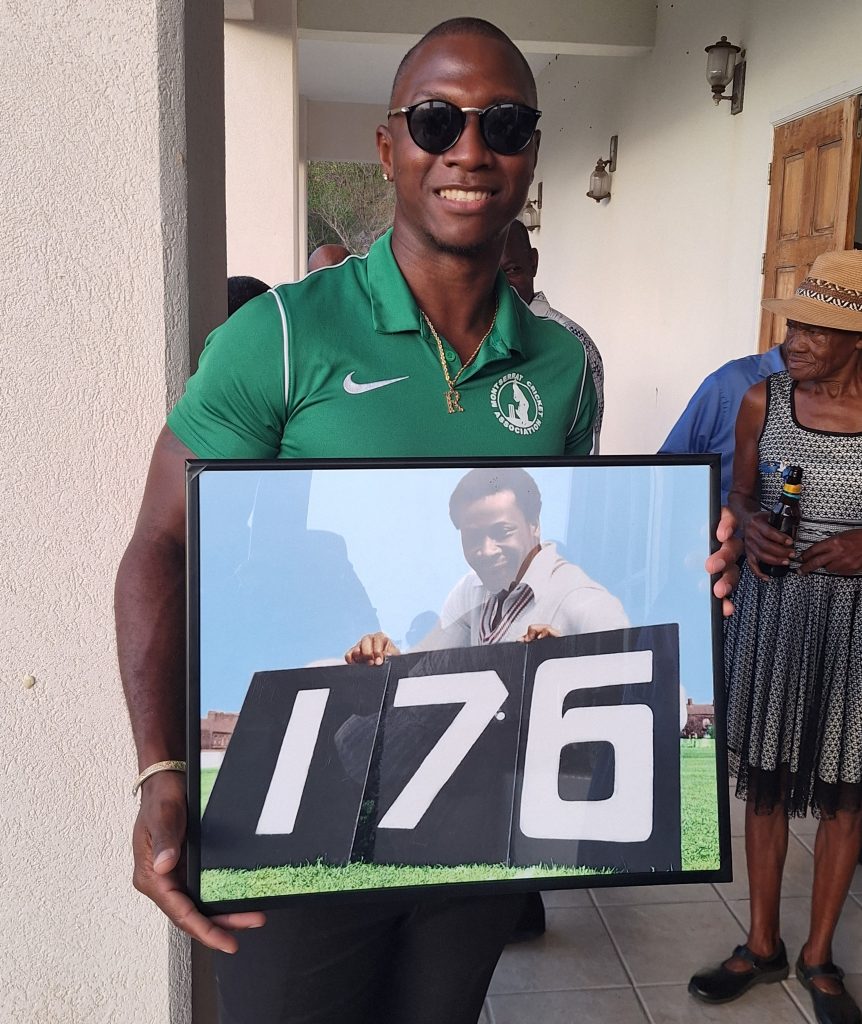
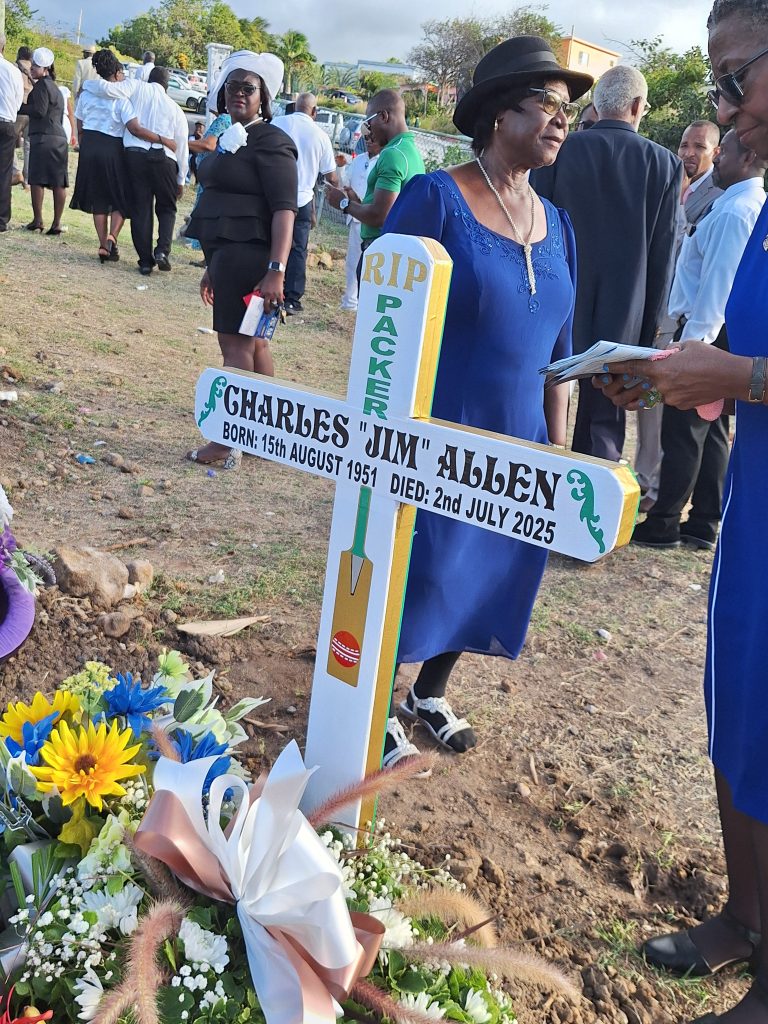
1xbet casino discount

“When you look at the breakdown of the numbers you would recognize that the people have spoken right across the country,” Meade told Radio Montserrat. “They clearly had a feeling that the United Alliance would be the party of choice to take the country forward.”

The four other United Alliance members elected were Dr. Ingrid Buffonge, John P. Osborne, Veronica “Kaye” Dorsett-Hector and Dwayne Hixon. During a swearing-in ceremony Friday afternoon at the Montserrat Cultural Center, portfolios were announced.

● Meade will oversee the Ministry of Finance, Local Government, Immigration, Regional Affairs, Tourism, Economic Management, Trade, Information, Communication and Digital Transformation. He continued his unbeaten streak in Montserrat elections. In seven national contests, he has never failed to earn a seat.

● Buffonge, a trusted and admired physician, will run the Ministry of Education, Health, Social Services and Youth Affairs. First elected in 2014 with PDM, she left the party in 2015 and ran as an independent in 2019, finishing 12 votes short of a seat. She joined United Alliance this year and earned 1,086 votes Friday, just seven behind overall leader Crenston Buffonge of MCAP.

● Dorsett-Hector, an attorney and former teacher and Festival queen, was named Deputy Premier and will direct the Ministry of Infrastructure, Labor, Transportation, Energy and Ecclesiastical Affairs. She was first elected in 2019 with MCAP and served as Parliamentary Secretary but resigned and later joined United.

● Osborne, a businessman and son of Montserrat legendary Chief Minister John A. Osborne, was assigned the Ministry of Agriculture, Lands, Housing, Environment and Sports. He is the youngest member of the United Alliance and is immensely popular among the youth, notably for his involvement in motorsports.

● Hixon, a real estate developer, barely missed out on a seat in 2019 with PDM. He will be a Parliamentary Secretary and work alongside Osborne in the Ministry of Agriculture.

Photo courtesy Montserrat GIU
Dr. Ingrid Buffonge is sworn in. She will oversee the Ministry of Health and Education.

DISAPPOINTMENT FOR MCAP

Although United Alliance claimed a plurality of the votes Friday, the top individual vote-getter for the second election in a row was Crenston Buffonge of MCAP. However, he was the only MCAP member to earn a seat. Outgoing Premier Joseph Farrell (Easton Taylor) and Deputy Premier Dr. Samuel Joseph finished 15th and 18th, respectively. It was a stunning development for the two political veterans. Most people vote along party lines, so the fact that Buffonge earned the most votes but none of his party members earned a seat is a profound statement.

“I want to congratulate the United Alliance party on their victory at the polls,” Joseph said in a statement. “The people of Montserrat have spoken, and we honor their decision.”

Three members of the PDM earned seats. Party leader Paul Lewis and Donaldson Romeo both got elected. Closing out the Top 9 was PDM’s Nyota Mulcare, a former president of the Montserrat Civil Service Association. The PDM members will now serve in the Opposition.

BUILDING A TEAM

On January 25, 2024, Meade announced on Radio Montserrat that he would return to the political arena after more than seven years away. In October of 2016, while he was a member of MCAP and serving as leader of the Opposition, he retired and turned over the party leadership to Farrell. Meade said earlier this year that his return was a response to the fervent requests from the public.

“This has nothing to do with ego, image or legacy but everything to do with service to the people,” Meade said in January. “So many have said to me, ‘Reuben, you cannot be immune to the cries of the people. Do not bury your talents under the blanket of retirement.’ I have removed that blanket.”

Meade assembled a team comprising newcomers and others who contested previous elections. He set out to form a team that mixed youth and experience and included men and women. “We’re a modern team with modern ideas,” he said earlier this year. “Our values are non-negotiable.”

On the campaign trail, Meade latched on to several issues plaguing Montserrat, especially access. His team has promised to procure a ferry contract in time for the holiday season and also to eventually reintroduce Twin Otter aircrafts, which can accommodate as many as 19 passengers and are ideal for the short runway at John A. Osborne Airport. Meade has also vowed to push back against what has been deemed an overreaching agenda by Governor Sarah Tucker and said he would bring back the popular Radio Montserrat call-in show What’s On Your Mind.

Photo courtesy ZJB Spirit of Montserrat
Members of the United Alliance are interviewed by Viona Alexander Smith early Friday, October 25, 2024. From left, Reuben T. Meade, John Osborne and Dwayne Hixon.

A CLOSER LOOK

Among the many interesting revelations from the election:

● This marked the eighth national election in a row in which the government has changed hands. The last party to retain its majority was John A. Osborne’s People’s Liberation Movement (PLM) in 1987.

● Speaking of Osborne – also known as “John Bassey” – three of his children contested the 2024 election: his sons David (PLM) and John Jr. (UA) and his daughter Shirley (PLM). John Jr. was the only one to earn a seat. David lost his first election following four successive victories (2006, 2009, 2014, 2019).

● Of the 34 candidates, 15 were women, the most ever. The previous record was eight in 2019. The first woman to contest an election in Montserrat was Margaret Rose Kelsick in 1958. She lost, then ran again in 1961 and earned a seat.

● George Kirnon of United Alliance finished 11th with 741 votes – just 44 short of getting a seat. It was almost a storybook ending for Kirnon, who was ruled ineligible to participate due to residency qualifications but won a judgment Monday, October 21, and was allowed to participate.

● Independent candidates struggled mightily to gain traction amid the dominant presence of the three major parties.

● The voter participation rate was 67.4 percent. Since Montserrat’s system of ministerial government was introduced in 1960, the highest election turnout was 80 percent in 1970 when Austin Bramble defeated his father, William H. Bramble.

Photo courtesy Montserrat GIU
Outgoing Premier Joseph Farrell hoped to retain his seat but he finished 15th, likely ending his political career.

● Farrell, who has strong support among the religious community and is a respected figure, lost his first election since entering in 2006. Speaking to Viona Alexander-Smith of Montserrat GIU on Thursday night, he reflected on his five years as Premier. “It had its ups and downs. In March 2020 we were greeted with COVID. As Premier there were times that I was very nervous but I had to show a bold face. I know there are leaders who refuse to make decisions because they are scared to get criticism. My mantra over the past five years has been, ‘Damned if you do, damned if you don’t’ . . . so do what you have to do.”

As for Meade, the new Premier announced some fresh initiatives on Friday. He will implement a rotating system of Deputy Premier so each can gain experience. Also, in the spirit of accessibility and transparency, an office will be set up in St. John’s where the public can lodge issues and complaints, “rather than having to hunt down a minister of government,” Meade said.

Finally, Meade stressed that the election is over and Montserrat must now consolidate.

“This is not United Alliance vs. the rest,” Meade said. “This is Montserrat vs. the rest. We will work together to make this country develop to its full potential for us and for our children and grandchildren.”

CLICK HERE TO VIEW THE COMPLETE ELECTION RESULTS

WATCH THE SWEARING-IN CEREMONY

https://www.youtube.com/live/5472Mil-i1c


TRENDING NOW

MOST POPULAR ALL-TIME STORIES

error: Content is protected !!